
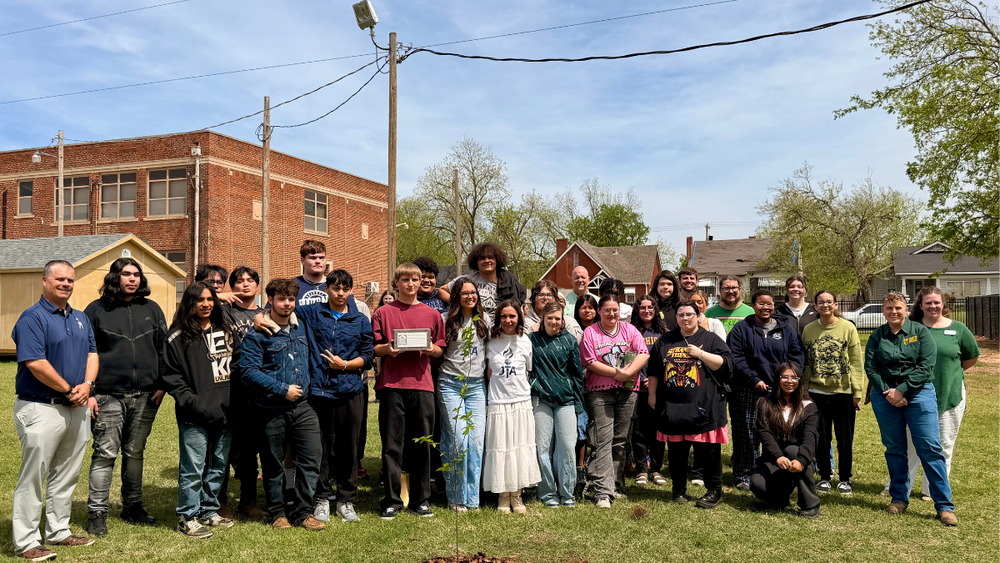
Jim Thorpe Academy students had the opportunity to take part in the Oklahoma City National Memorial & Museum’s Journey of Hope tour. This experience brought history to life through powerful, personal stories of the April 19, 1995, bombing.
Through a panel discussion featuring survivors, family members, and individuals directly impacted by the tragedy, students gained an understanding of the long-term effects of trauma, the importance of resilience, and the role students can play in shaping stronger communities.
Panelists shared firsthand accounts of confusion, fear, and loss in the aftermath of the bombing, as well as the journey toward healing. Their stories highlighted not only the devastation of that day, but also the strength found in connection and the collective response that became known as the “Oklahoma Standard.”
For many students, the experience left a lasting impression.
“The stories made me think about how important it is to be there for people and to treat others with kindness, because you never know what they’ve been through,” shared December Nanaeto, a Jim Thorpe Academy student, which inspired her to continue spreading the Oklahoma Standard.
The visit was wrapped up with a tree planting ceremony featuring a sapling from the Survivor Tree at the Oklahoma City National Memorial. The tree serves as a symbol of hope and a reminder of the lessons students learned throughout the day.
Jim Thorpe Academy Principal Hannah Holland emphasized the importance of providing students with opportunities to engage in experiences that go beyond the classroom.
“Experiences like the Journey of Hope tour allow our students to connect history with humanity,” said Holland. “Our goal is not only to educate students academically, but to help shape compassionate, thoughtful individuals. Hearing these stories firsthand and reflecting on them through real experiences like the Survivor Tree planting creates a lasting impact that students will carry with them for years to come.”
Shawnee Public Schools believes learning experiences like this will prepare students to lead with empathy, think critically, and make a positive impact in their communities.
These opportunities are a reminder that through conversation and connection, communities can honor the past while building a stronger future.